Technical note
10 Nov 2026
Interchange is usually decided on dimensions, because dimensions are the only thing a buyer can measure at the bench. Dimensions get the element into the housing. They do not decide whether it survives there.
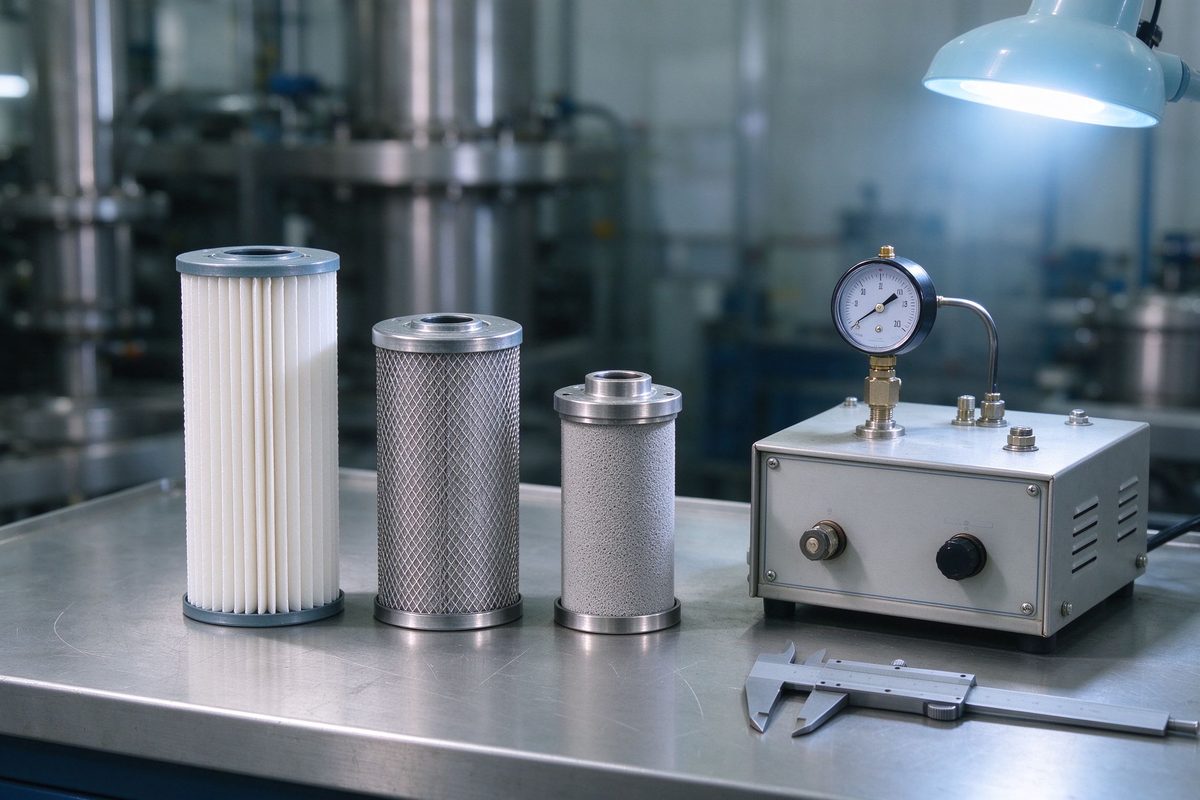
Take two elements with the same outside diameter, the same inside diameter and the same overall length. Both drop into the same bowl. On a return line at 2 bar they may behave identically for months.
Move the same two elements to a pressure-side position and the difference appears: one holds its shape at the rated differential pressure, the other starts to deform, the pleats collapse inward, and the bypass opens earlier than it should — or the media tears and the element stops filtering altogether.
Collapse resistance is built from three things that are invisible on a dimension drawing: the media itself, the pleat support (the wire or mesh layer behind the pleats), and the end-cap bonding that holds the pleat pack to the caps.
A cheaper element usually saves on all three at once — thinner support layer, less adhesive, a media grade chosen for flow rather than strength. The result still measures correctly with a caliper.
Elements are normally rated for a collapse or burst differential pressure, established by test rather than by calculation. That rating assumes a clean element at a stated flow and viscosity. In service the element is neither clean nor at nominal flow, and cold start is the worst case: high viscosity, full flow demand, maximum pressure drop across a dry pleat pack.
This is why cold-start behaviour is the practical test of a pressure-side element. An element that survives a warm machine can still fail on the first cold morning of the year.
Confirm the differential pressure rating against the duty, not against the old element's appearance. Confirm the flow and viscosity the rating was established at. Confirm the bypass setting in the housing, because a bypass that opens early turns a strong element into an unfiltered system.
If a supplier quotes only dimensions, ask for the rated differential pressure and the media grade. Two numbers are enough to tell whether the element belongs on the pressure side or only on the return line.
All brand names and part numbers are the property of their respective owners and are used only to indicate compatibility. JIANASH is not affiliated with, authorised by or sponsored by these manufacturers.
Get a quotation
Send the part number, a drawing, or a photo beside a ruler.
Fast quotation
One working day for a first answer. MOQ and lead time are stated with the quotation.
Open the inquiry form